 EN
EN FR
FR NL
NL



The underestimated impact of the Iran war on silver prices
In recent months, silver seemed unstoppable. Analysts pointed to structural shortages, rapidly growing demand driven by the energy transition, and a market that was becoming increasingly tight. The narrative was compelling: rising industrial demand combined with limited supply would support prices for years to come. Yet markets do not run on narratives alone, and that is precisely where the risk for silver begins.
Unlike gold, silver is not purely a safe haven asset. The price increase in recent years was largely driven by speculation around potential shortages linked to industrial demand. Applications in solar panels, electronics, and electric vehicles fueled strong and sustained growth. This foundation gave speculators confidence and reinforced the idea that silver would remain structurally scarce. As long as demand kept increasing, higher prices appeared justified.
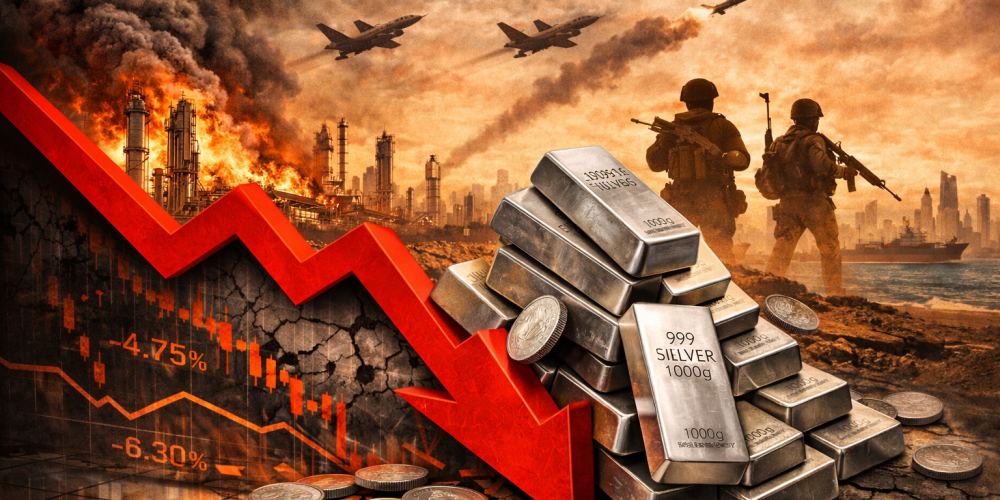
Geopolitical tensions surrounding Iran, however, could fundamentally alter this picture. While war is often associated with rising precious metal prices, the situation is more nuanced for silver. A conflict in this region has direct consequences for the global economy. Higher energy prices, disrupted supply chains, and growing uncertainty put pressure on industrial activity. Companies become more cautious, delay investments, and scale back production. In such an environment, demand for industrial metals like silver naturally declines.
This places the market in a vulnerable position. What was once perceived as scarcity can quickly turn into demand destruction. Silver prices are not determined solely by current supply and demand, but also by expectations. A significant portion of the recent rally was driven by speculation on future growth. Once that growth comes into question, market sentiment can shift rapidly.
The turning point lies not only in economic reality but also in investor perception. As soon as it becomes clear that industrial demand is slowing or stabilizing, and that the economic impact of the conflict is greater than expected, many market participants will reassess their positions. In a market heavily driven by capital flows, this can result in fast and sharp price movements.
This is where the real risk for silver lies. What was once seen as a structural growth story can quickly turn into a cyclical narrative sensitive to economic headwinds. As speculators begin to unwind their positions, downward pressure can accelerate and reinforce itself. Price declines may not be gradual, but rather abrupt and volatile.
The dominant narrative surrounding silver is therefore under pressure. The combination of geopolitical tensions and economic slowdown could weaken industrial demand and remove a key pillar supporting prices.
In such a scenario, a decline in silver is not an outlier risk, but a logical outcome.